

Colloquium Committee
As always, we thank Matt for his invitation to provide feedback as the co-chairs of the latest (and our last) colloquium, Peter Shabad’s (2022) “Owing and Being Owed: Shame and Responsibility Toward the Other.”
In the course of the colloquium, we found that, despite being experienced as acute and sharp, shame’s contours were hard to mark distinctly. Shame seems to seep into nooks and crannies, run deep, and hold close relations with guilt, recognition (or lack thereof), agency, acceptance, belonging, and care. One can bring shame upon oneself, be shamed by others, inherit shame, or share in it vicariously or by proxy. Shame seems to touch any and everything in intimacy, both giving and receiving, and to play nodal roles in group and social processes.
We don’t think this colloquium has fully covered the issue of shame. It rather introduced it, and underlined some aspects of its clinical, motivational, and ethical dimensions. We believe shame was also a silent and constant companion in this discussion, hanging in the air, lending it something of its aura, heightening self-consciousness and caution. It took time, joint efforts, and brave offerings of vulnerability to overcome it.
We wish to thank, as always, the generosity of our author and panelists, as they shared with us their time and thoughts: Peter Shabad (USA), Koichi Togashi (Japan), Elizabeth Corpt (USA), Meg Carley (Australia), Ashis Roy (India), Steve Botticelli (USA), Sandy Silverman (USA), Micha Weiss (Israel), Carmine Schettini (Italy), Adriana Cuenca (Mexico), and Duncan Cartwright (South Africa).
We wish to thank the IARPP office staff, Elisa, Valerie, and Lucia; and our tireless translators, Emanuele Viaggio (Italy), Alexander Levchuk (Georgia), Stavros Charalambides (Greece), and Maria Jose Mezzera Gomez (Chile).
Beyond that, and ending our tenure as co-chairs, we wish to express our gratitude to IARPP’s membership. Throughout our tenure, despite never meeting many of you, we feel that we have come to know you, your unique voices, your friendly, forthcoming cooperation, your consideration. We thank all our “regulars,” our deeply appreciated veteran participants, our newcomers, and the brave who venture out of their linguistic comfort zones in order to write in English. We feel privileged to have been here, sharing and joining with the many who have brought to this space their vulnerable selves, the depth of their emotion, the brilliance of their minds, and above all their willingness to join, to speak, to be heard, to listen, to reach out. We also thank those who have followed quietly and lent themselves to learn, experience, and empathize. We feel that all of you have played crucial roles in creating and becoming this unique international community.
The last two years have been especially difficult, reflecting the hardships of the world. We believe now, more than ever, in the critical role of holding up spaces for thought and dialogue, as an antidote to surging violence and gathering darkness. We look forward to a bright and stimulating future for the colloquium series under its new co-chairs and send to you our gratitude and farewells.
Cathy and Shlomit
Cathy Hicks (Australia) and Shlomit Gadot (Israel)
Exiting Colloquium Committee Co-Chairs
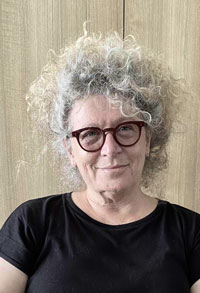
Cathy Hicks, Ph.D.
Sydney, Australia
Email Cathy Hicks
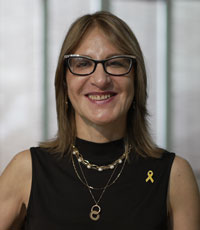
Shlomit Gadot, Ph.D.
Ramat Hasharon, Israel
Email Shlomit Gadot