

Colloquium Committee
Dear IARPP Community,
We are pleased to invite you to the next IARPP Colloquium which will run from June 4th through June 14th.
We would like to extend our heartfelt thanks to Cathy Hicks (Australia) and Shlomit Gadot (Israel) for their thoughtful and dedicated work as outgoing co-chairs of the IARPP Colloquium. Their commitment, care, and intellectual generosity have helped create a vibrant space for meaningful dialogue and shared learning. Through their leadership, the Colloquium has flourished as a place where diverse voices can come together in genuine engagement, deepening our collective exploration of relational psychoanalysis. We thank them warmly for all they have given.
In our next Colloquium, we will gather in conversation around Brent Willock’s (Canada) award-winning paper: “On Dreaming, Parasomnia, Dream Enactment, and Murder” (2022), recipient of the Gradiva Award. This upcoming Colloquium offers a unique opportunity to engage deeply with a text that is as clinically provocative as it is theoretically rich.
Willock’s article takes us into the unsettling terrain where dreaming, embodiment, and action blur – raising profound questions about the limits of psychic life and the thresholds between fantasy and enactment. By exploring parasomnia and extreme forms of dream enactment, the paper challenges us to reconsider the relationship between unconscious processes and their behavioral manifestations. It invites us to think not only about what dreams mean, but about what happens when they are no longer contained within the symbolic space of the mind.
We selected this paper because it speaks directly to core concerns in relational psychoanalysis: the interplay between mind and body, the co-construction of meaning, and the ways in which dissociated or unmentalized experience can emerge in action. At the same time, it pushes us beyond familiar clinical territory, opening dialogue with neurobiology, trauma, and questions of responsibility and agency. It is precisely this tension – between the known and the unthinkable – that makes the article so compelling for group discussion.
Participants are encouraged to bring their own clinical experiences, associations, and questions into the conversation. How do we understand forms of enactment that seem to bypass symbolization? What happens to relational thinking at the edge of consciousness? And how might this work expand or challenge our clinical sensibilities?
We hope you will join us for what promises to be a lively and thought-provoking exchange. Your presence and voice are essential in shaping the dialogue.
We look forward to meeting you in June,
Laura and Temo
Laura Frigau-London (Italy/USA) and Temo Keshelashvili (Georgia/Canada)
Colloquium Committee Co-Chairs
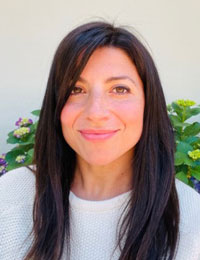
Laura Frigau-London, Psy.D., LMSW
Cagliari, Italy
Email Laura Frigau-London

Temo Keshelashvili, M.Sc.
Tbilisi, The Republic of Georgia
Email Temo Keshelashvili