

Mexico
The Mexico Chapter is pleased to share its current activities and ongoing projects, all of which aim to foster learning, collaboration, and the dissemination of Relational psychoanalysis.
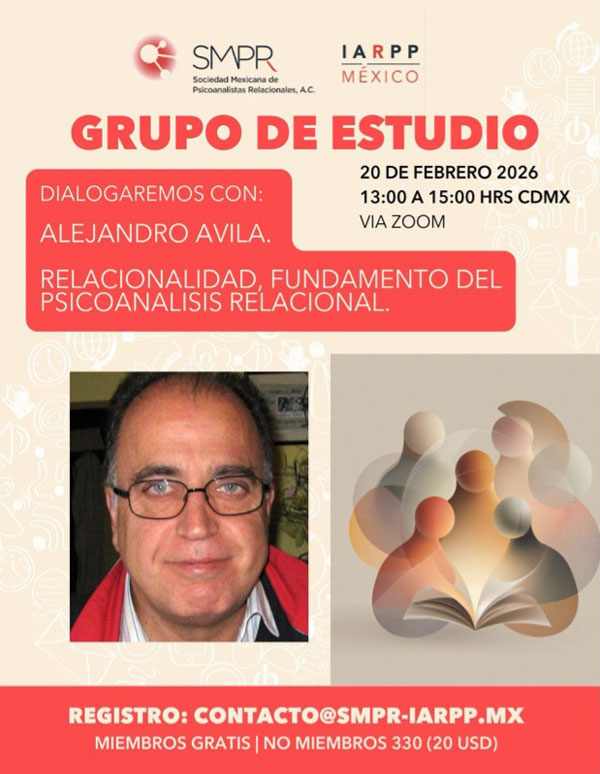
The academic coordination team, consisting of Alejandra Plaza, Graciela Viturro, Wilma Belzarena, Humberto Giachello, Anabelle Soto and Saraly Vega, organized the following events:
A central initiative is the Study Group, which embodies the Chapter’s mission by creating the opportunity for members to connect, learn, and reflect together. Meeting monthly, participants engage with selected readings presented by a speaker, encouraging dialogue and thoughtful exploration of relational concepts.
The Postgraduate Course in Clinical Relational Psychoanalysis is another key offering, designed to strengthen participants’ clinical skills. The 2025 program, Clinical Practice in Relational Psychoanalytic Psychotherapy: Foundational Aspects, is followed in 2026 by Clinical Practice in Relational Psychoanalytic Psychotherapy: The Sociocultural Relational Matrix, extending the focus to broader contextual dimensions of clinical work.
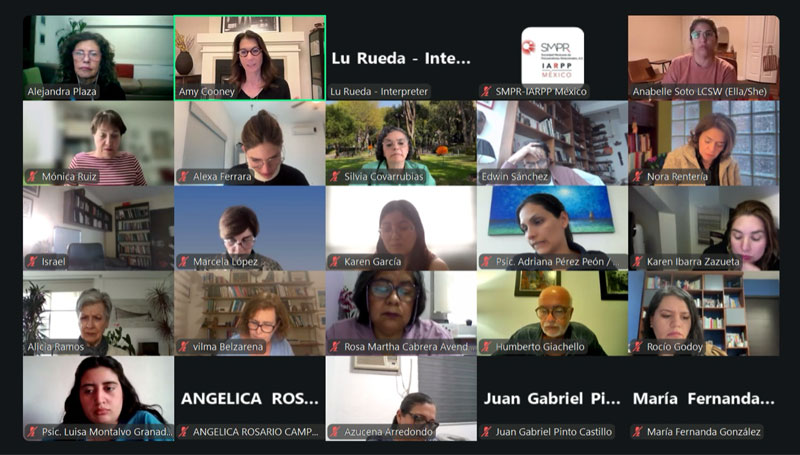
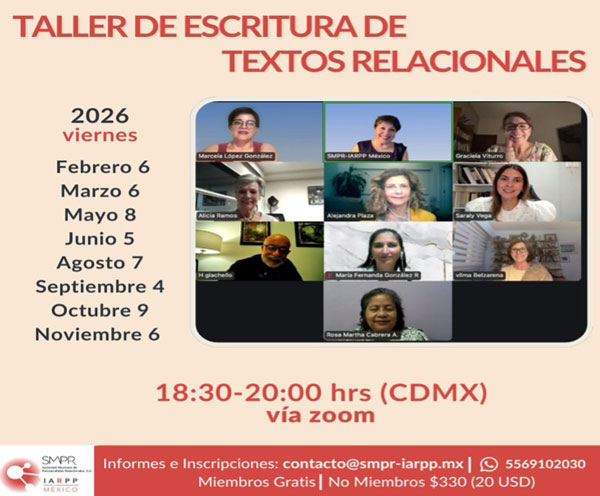
The Writing Workshop for Relational Texts meets monthly to provide a collaborative environment for developing relational writing. This hybrid-format activity encourages creativity and collective authorship (the group’s writers are currently collaborating on “Clinical Relational Diaries: Change through Relationship; What the Therapist Brings; What the Group Brings”), and provides feedback on individual projects.
The Intervision Group, organized by Marcella Lopez and Alicia Ramos, represents a horizontal model of clinical reflection, i.e. peer supervision, in which participants draw on their collective experience to deepen understanding of the therapeutic relationship.
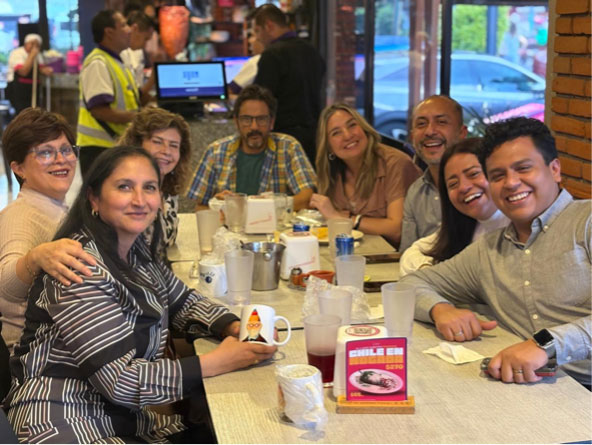
Community Coordination, facilitated by Ariadne Papacostas, Anne Maxwell, Gabriel Pinto, and Mónica Ruiz, focuses on strengthening relational bonds within the organization. Its goal is to cultivate a warm, participatory, and pluralistic community. Its work centers on four areas: strengthening emotional connection, fostering proactivity, supporting the coordination team, and ongoing evaluation. Planned initiatives for 2026 include social gatherings, an emotional presence program for partners during significant life events, development of member-led projects, a public recognition system, structured opportunities for reflection and adjustment, and free access.
Liaison Coordination, established last year by María Fernanda González Robles, promotes partnerships with institutions sharing an interest in psychoanalysis. Its efforts include establishing academic and clinical exchange agreements, forming an editorial committee, and developing a blog and website to disseminate activities and publications. In 2026, the team expands with Karen Ibarra Zazueta and Adriana Pérez Peón and consolidates agreements with institutions such as Centro K (Center for Psychoanalysis in Mexico City) and the Latin American University of Yucatán. These collaborations support intervision spaces, new partnership proposals, and the integration of psychological and psychoanalytic literature.
Public Relations Coordination developed a media and outreach strategy in 2025 to increase visibility. Facebook and Instagram serve as primary platforms, with expansion to YouTube and TikTok planned. A publication policy ensures coherence across communications, promoting events such as study groups, intervision meetings, training programs, and social gatherings.
Finally, Clinical Coordination is advancing plans for 2026, prioritizing the creation of the SMPR-IARPP Mexico Community Care Clinic, expected to open in April. The initiative includes building referral partnerships and forming supervision groups to review clinical cases. Ongoing evaluation will guide future adjustments.
Together, these initiatives reflect a dynamic and collaborative effort to strengthen the practice and community of Relational psychoanalysis in Mexico.
Alejandra Plaza Espinosa and María Fernanda González Robles
Mexico Chapter Co-Chairs
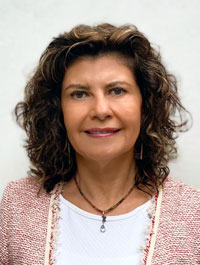
Alejandra Plaza Espinosa, Ph.D.
Mexico City, Mexico
Email Alejandra Plaza Espinosa
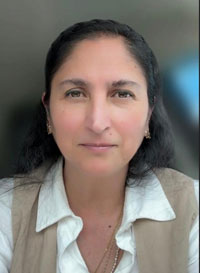
María Fernanda González Robles, Ph.D.
Mexico City, Mexico
Email María Fernanda González Robles