

2025 IARPP 21st Annual Conference Athens, Greece
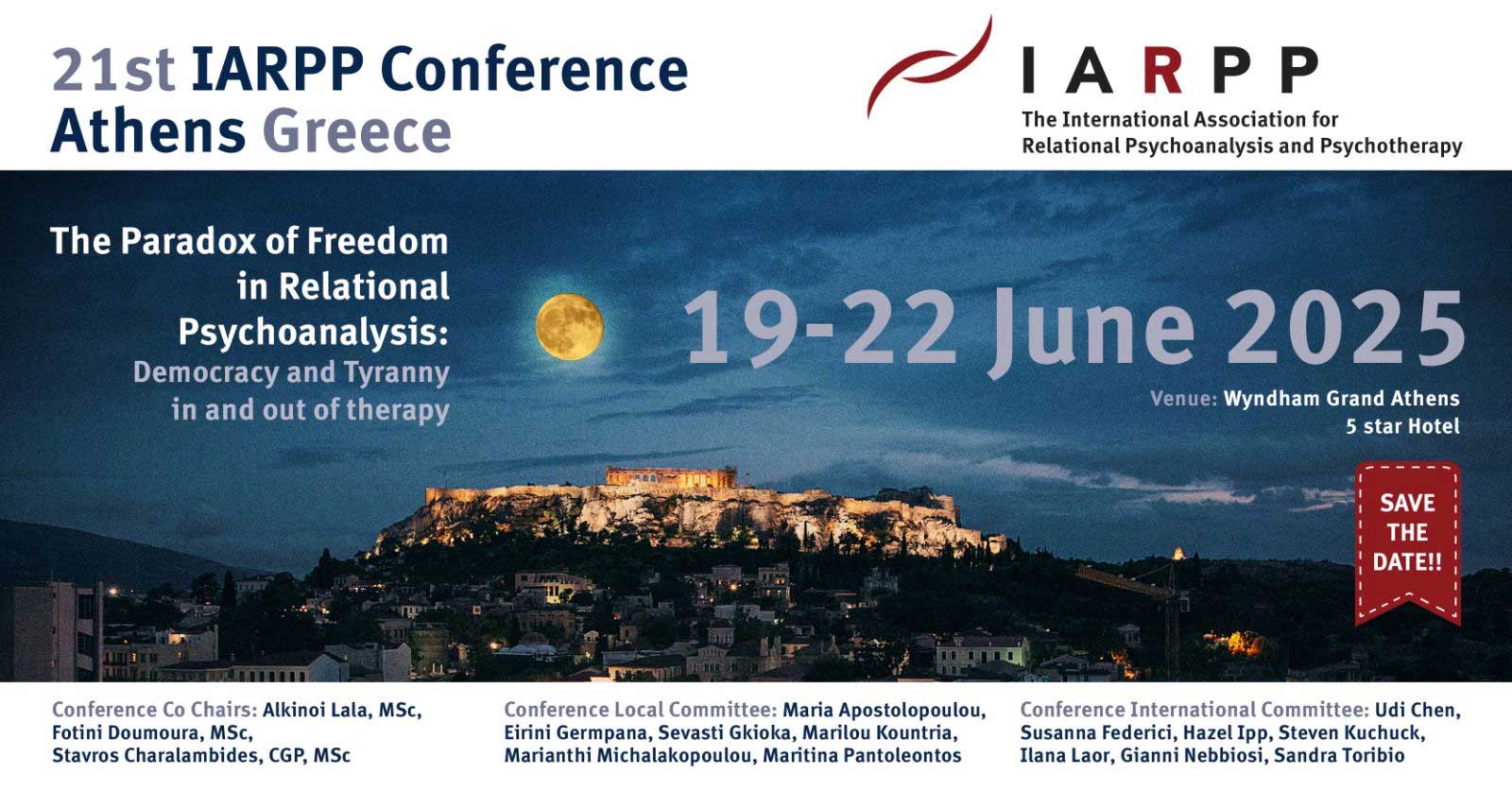
The piece below offers an overview of the Athens conference experience drawn from the perspectives of a cross-section of attendees.
CONFERENCE-GOER REFLECTIONS
As June approached, anticipation was high for IARPP’s Twenty-First Annual Conference, held for the first time since 2007 in Athens.
First-time attendee Juan Eduardo Pulido Devia (Colombia, via Spain) commented, “Attending an international event for the first time is an expansive, disruptive, and deeply nourishing experience. Witnessing such a diversity of personalities, lifestyles, and therapeutic stances—coming together under the umbrella of relational psychoanalysis to understand reality—is both inspiring and profoundly challenging.”
Given the state of the world, the challenge included much stress and anxiety as well.
Upon arrival at the hotel, Mary Curry (USA) encountered a colleague “overwhelmed with anxiety about the immediate safety of their family and friends. They expressed that they couldn’t think and were trying to put the final touches on their paper.” Curry, who weaves a somaticinclusive approach into her psychoanalytic work, invited the colleague “to try a brief somatic practice to get their thinking back on track, explaining that this is a way to mitigate the overwhelming anxiety that creates breakdown in thinking and floods the body with cortisol.” She adds, “It is an offer I make a lot these days both in and out of therapy. Everyone says yes. We did it together, and it was effective.”
Shahriar Borghei (an Iranian living in Spain) relates his own feelings of stress and dislocation
contending with the bombing of his home country on the eve of the conference: “I live in Spain.
But the country that lives inside me is Iran.”
Landing in Greece, Borghei writes,
My body feels utterly exhausted—partly from the overnight flight, partly from the week I’ve just lived through. I feel deeply sad.” He notes, “The rest of my colleagues are stuck in Iran. We were supposed to be a group of twenty. Thirteen of us were denied visas—because Iran is a sanctioned country. Six more couldn’t leave due to the war with Israel; flights were canceled, borders shut. Iran is now a war-torn country. War-torn. I still cannot wrap my head around that word.” Still, he found some solace: “I know that five other Iranians—like me—live in different countries and have managed to make it to Athens. This thought feels like a small ray of hope, something to hold on to.
For Hamideh (Torani) Mohammadi Nasab (an Iranian living in Canada), the advent of the conference was equally dramatic. “On the evening of June 12, as I was reviewing the conference schedule with excitement, the news broke: missiles were flying between Iran and Israel. The conference theme was freedom and tyranny in relational psychoanalysis. But now, the paradox wasn’t just academic, it was real, unfolding in my body, my fears, and my phone calls home.” She wondered, “Could I really attend, with this weight on my heart? Did going even make sense?” After much hesitation, Mohammadi Nasab decided to attend.
The first panel was titled “Trauma, Breakdown, and the Collapse of Meaning.” The presenter, María Javiera, shared the story of a Chilean woman displaced by political unrest. Words like numbness, violence, and disconnection kept repeating. I didn’t just hear them, I felt them in my chest. I knew what it meant to migrate because of political pressure. I left my country for the same reason two years ago. I was born during the Iran-Iraq war. My mother had lost her brother in that war. And just days before the conference, photos from Tehran showed beloved neighborhoods in ruins. At the end of the session, a young woman raised her hand: “I’m Iranian,” she said, “and I’ve been living with denial and numbness these past few days.” Zahra’s voice lit something in me. I was no longer alone. She gave words to what I couldn’t say. I saw empathy in the faces around us. And I began to feel connected, both to the conference and to myself.
Thus we gathered together, in the birthplace of democracy, to contemplate freedom and tyranny and to reckon with our differences as well as our yearnings for connection.
***
Katerina Kalantzopoulou (Greece) commented, “It was very moving for me to attend the conference in person this time, especially during such a challenging time for humanity and with such a relevant theme.” Marianthi Michalakopoulou (Greece) raved: “Every aspect of the Athens conference from start to finish was thoughtfully planned and executed, creating a space that fostered connection, learning, and inspiration. The conference was not only professionally stimulating but also emotionally resonant, an experience that reflected the depth and humanity of our field.”
Carlos Rodríguez Sutil (Spain) noted that the conference theme “resonated deeply, given the significant national and international political currents of our time.” Noga Ariel-Galor (Israel), following on Zoom, commented that “lectures unfolded the heartbreak and misery of therapists and patients around the world, sensitively articulating how our psyches and relationships are affected. Does this mean the world is awful? In this conference, we were able to hold the fact that it’s both dreadful and wonderful. Wonderful, thanks to human relations and how we try to be there for one another.”
Unable to leave her country due to the bombings, Ariel-Galor commented ruefully, “Instead of packing sandals and books, we packed away our heartbreak and logged in from homes, clinics, and safe rooms.” From her Tel Aviv apartment, she wondered, “Will we have the capacity to feel with others even when we are alone?” Yet once her remote participation in the conference began, Ariel-Galor “soon discovered that being alone does not mean isolated. The IARPP community made sure of that. The organizers adapted with extraordinary sensitivity and speed. Our presentations were kept on schedule. The hybrid format was expanded to hold us, quite literally. We were welcomed not as a problem to solve, but as people to include. This made all the difference.”
Gila Ofer‘s (Israel) plenary presentation wound up being quite dramatic not only for its content but for its themes coming to dreadful life mid-presentation. As described by Borghei:
She is speaking about how people in countries repeatedly torn apart by war gradually lose their capacity to imagine. They can no longer trust in the continuity of any dreambecause everything can end in a single moment. In the very midst of my delight in her talk, a piercing siren suddenly blares through the hall’s speakers. Startled, Dr. Ofer says, “I’m so sorry. There are rockets being fired. This siren means we must immediately go to the shelter, and I can no longer continue.” She says this, closes her laptop, and the hall falls into stunned silence. Yes— people in war-torn countries cannot trust in the continuity of any dream.
Anticipating such a possibility, the plenary moved smoothly on to the next speaker. Some forty minutes later, showing astounding steadfastness and poise, Ofer returned to the screen and finished her talk.
Devia found that one of the conference highlights was the opportunity to encounter a plurality of clinical perspectives. He observed:
Athens is a symbolically powerful place to speak of democracy and tyranny, of power dynamics and their influence on the therapeutic field. As the event unfolded and the first plenaries took place, it became clear that the geopolitical landscape would be a central violence and darkness—something deeply difficult to process in our work with patients—and the theoretical and methodological approaches presented by different colleagues felt refreshingly relevant.
***
As to the quality of the presentations, Sutil remarked, “This conference provided yet another professional and intellectual experience of remarkable caliber, consistent with my previous attendance at IARPP conferences … Overall, the standard of the presentations was commendably high. As anticipated, the plenaries and individual communications maintained an exceptional level, drawing inspiration from a particularly pertinent conference theme.” He added that “the informal interactions in the corridors also proved to be highly valuable.”
Curry noted, “My practice is always strengthened by attending an IARPP conference. Dr. Maxine Spedding’s (South Africa) paper, “Systems of Pathological Accommodation or Accommodating Pathological Systems? The Relational Roots of Autistic Camouflaging and the Implications for Psychotherapy,” is one of many papers that will enhance my work. Concepts from Maxine’s paper found their way into my practice with a long-term patient who struggles relationally with an adult son with autism.”
“From the choice of plenary speakers to the diversity of panels, workshops, and breakout discussions, the conference created an environment where all felt welcomed, supported, and inspired,” said Michalakopoulou. She shares, “I was especially moved by the vulnerability and authenticity of many of the speakers and attendees, which created a space that felt not only safe but also transformative … I return to my practice feeling renewed, grounded, and deeply grateful to be part of this community.” Adds Kalantzopoulou, “The conference was an experience of sharing thoughts, emotions, and conversations – and also a source of rich learning, both theoretical and experiential.”
***
As I noted in my Letter from the Editor, several important and occasionally contentious questions arose regarding ways that relational thinking might evolve. These matters emerged in various registers throughout the conference, offering ongoing fodder for further discussion and contemplation.
Noting that “psychoanalysis has long wrestled with its relationship to the social field,” George Bermúdez (USA), a group analyst as well as a psychoanalyst, identified “two parallel discourses” operating in the conference with respect to the place of group dynamics. One discourse, he noted, “—was rooted in the familiar terrain of the dyadic clinical encounter: clinical narratives engaging trauma, intersubjectivity, and sociopolitical rupture.” Many of the plenaries and panels featured vivid descriptions of clinical work conducted across dramatically different sociopolitical vertices between analyst and patient, and many others cases were described in which the dyad shared in the same or parallel social upheavals and political traumas.
The second discourse, Bermúdez continued, “was less visible but unmistakably alive: —a gathering of those attuned to group dynamics and social systems psychodynamics.” One of the conference’s six plenaries gave full voice to the benefits of attending to group and systems psychodynamics, even for clinicians who typically focus on individual treatment. In this plenary, attention was brought to the utility of integrating group modalities into analytic training and organizational leadership.
Post-plenary small discussion groups were held on two consecutive days. These intimate group meetings (one of which was conducted in Spanish) provided opportunities for many more voices to be heard. Kalantzopoulou remarked, “The discussion groups were a space for connection with people from around the world and a great opportunity to process and digest the plenary sessions.” I have found that the discussion groups also offer opportunities for the development of closer collegial relationships, and even for the blossoming of friendships.
New to the conference this year were two well-attended morning Large Groups. Bermúdez describes the format as “an experiential group process designed to discern, reflect on, and metabolize the dissociated and unconscious dynamics of the conference.” Kalantzopoulou found these gatherings to be “very meaningful, offering a chance to experience group dynamics firsthand, dynamics we often encounter with our patients in individual therapy, in powerful and
overwhelming ways.” A newcomer to the experience, I found the Large Group to be intriguing and absorbing.
Some attendees voiced a desire for further integration of group processes into IARPP’s mission and activities; others viewed the interest in groups as one valid choice available among a plurality of clinical perspectives. Some felt a “group turn” to be imminent, whereas others regard it as too much of a departure from our primary roots as a dyadic relational rather than a group organization.
Overall, many participants in the conference were especially appreciative of the opportunity for us to get together for community time and sharing of a range of experiences that we were having in and out of the conference. Members found post-plenary discussion groups thought-provoking and stimulating as always, and beyond this noted that they created a much needed opportunity for fellowship and social and personal sharing, and a time when sustaining and building our connections to one another felt more important than ever. With that in mind, and in response to expressions of the wish for more, IARPP is planning to add more opportunities for community sharing and group reflection in Toronto, with added time for post-plenary discussion groups and other formats that we are working on to bring our community together in generative and supportive ways.
Of these conflicting visions, Kalantzopoulou commented, “Of course, there were also moments of tension during the conference — in the Large Groups, in the Membership Meeting, during some talks, and in the small groups. But it’s important to make room for these aspects too, to try to make sense of them. After all, what kind of therapists would we be if we pretended everything between us was always smooth and easy?”
Here I return to Jessica Benjamin’s comment in the IARPP newsletter’s inaugural issue from 2002, in which she noted that a goal articulated during the formation of IARPP was to offer relational clinicians opportunities to engage in “dialogue that produces differences and challenges us to face them.” Yes, this task is often a fraught one, and yet, as the conference iterated in myriad ways, the difficult, messy work to which we are called offers as one of its
rewards the potential to engage in dialogical processes that can facilitate greater intimacy and mutual understanding despite differences.
***
Contested areas commented on by members with whom I dialogued include Curry’s wish to “raise awareness about the evolution of theory and practice through the assimilative integration of the body in psychoanalysis.” In her opinion, “despite the increasing number of psychoanalytically informed somatic therapists within IARPP, and psychoanalytic therapists who assimilate somatic awareness in theory and practice who are members of IARPP, the disavowal of this psychoanalytic somatic evolution of theory and practice persists.”
Sutil remarked that “it was encouraging to observe that, despite potential language differences, the Spanish-speaking community is increasingly integrated within the IARPP milieu.” Yet Devia noted missing “the ideas, voices, and perspectives” of clinicians from the Global South. “I knew that if they had been present in this space, among colleagues open and receptive, the sessions would have been even more fertile.”
Various aspects of the ongoing Middle East conflicts reverberated through the collective conscious and unconscious of the conference, with several attendees observing what they felt to be inadequate acknowledgement of the Palestinian situation. More generally, the roles that political awareness should occupy within clinical work, presentations, conferences, and the organization itself were engaged throughout the gathering.
Additionally, Kalantzopoulou expressed a wish, shared by others, for “post-conference access to some papers, especially the plenaries,” a service which “would be very helpful, offering us the opportunity to revisit them at any time and to understand their complex ideas more deeply with each return.” A response was offered that difficulties with respect to patient confidentiality and publication processes make this a challenging prospect. I hope that further conversation on this and all other areas of debate will be encouraged and sustained by all parties.
***
The gathering culminated with a wonderful gala that took place on the roof of the Wyndham Grand Athens on Saturday night, amidst a welcome break to the day’s tremendous heat.
Mohammadi Nasab recalls, “We stood on a rooftop facing the Acropolis, the symbol of democracy. A warm breeze passed over us. There, surrounded by people from all over the world, I felt freedom and resistance, not just as ideas, but in my body. We looked into each other’s eyes and saw something human. We didn’t need words. In that moment, I felt hope. Because I could hear the quiet voice of freedom.”
Borghei, too, experienced something powerful atop the hotel:
It is the last night. The six of us Iranians are sitting together in a corner. At times we eat and drink, at times we talk, and at times we sink into the news on our phones, searching for the latest updates on the war. Around us, other guests dance and laugh freely—most of them likely not thinking about any war in the world. No matter how much we try, we just can’t bring ourselves to dance.
And yet, the IARPP community truly is kind—it has a warm and generous embrace. Friends from other countries come over and try to pull us onto the dance floor. We don’t have the energy to dance, but they too have learned in relational psychoanalysis how to connect—with people, with their pain, and with needs that may not even be consciously known. They suggest we play an Iranian song and dance to it. This idea suddenly brings our little group to life. We gather in a huddle, trying to decide on the song. Finally, we agree: a Bandari song—a fast, rhythmic music with soulful lyrics and melody, accompanied by a unique traditional dance from the south of Iran.
The song begins. The six of us dance our hearts out, and soon others join in. At one moment, in the middle of dancing, I open my tearful eyes and see a large group of colleagues from many different countries dancing Bandari with us. Our tears spill over, and we quietly leave the dance floor. Tears of sorrow? Tears of joy? Or perhaps tears of a hurting community that, after what feels like an endless solitude, has found moments of safety in a shared embrace.
For “this small experience of group democracy in the midst of the tyranny of the outer world,” Borghei expresses gratitude.
“In Colombia and across the Global South,” Devia reflects, “our histories have made us deeply critical and creative peoples when it comes to addressing the wounds of our territories. And in witnessing all those at the congress conference who resonated with collective pain, I find renewed hope in the possibility of building and expanding the IARPP community through our relational and critical perspectives.”
Despite their physical absence, Ariel-Galor remarked on her and her Israeli colleagues’ virtual presence: “We were there – in the WhatsApp group that became our hallway chatter, in the Zoom squares that held our nervous smiles, in the sessions where we presented papers written with months of care and curiosity.” She adds:
The theme that emerged for many of us was this: whether during the conference or beyond, being physically apart doesn’t have to mean being emotionally or intellectually disconnected. Relational psychoanalysis, at its core, holds room for what can be co-created across gaps – across cultures, screens, silences, and even crises. This year, connection came with a different texture. Tender, improvised, occasionally glitchy, but no less real.
Contextualizing her experience in light of the encroaching shadow of tyranny throughout the world, including in her United States, Curry considers “the concept of systems of pathological accommodation and the world we are all living in now.” She concludes, “Despite everything, I left IARPP in Athens with hope and determination that democracy and human decency will prevail.”
May it be so.
Matt Aibel, Editor
I am grateful to all the contributors quoted above for taking the time to share their reflections with us.
Juan Eduardo Pulido Devia, MA
Bogotá, Colombia / Barcelona, Spain
Email Juan Eduardo Pulido Devia

Mary Curry, Ph.D., LCSW
Santa Fe, New Mexico, USA
Email Mary Curry
Shahriar Borghei, MA, Ph.D. Candidate
Seville, Spain – via Iran
Email Shahriar Borghei
Hamideh (Toranj) Mohammadi Nasab, Ph.D.
Calgary, Alberta, Canada – via Iran
Email Hamideh (Toranj) Mohammadi Nasab
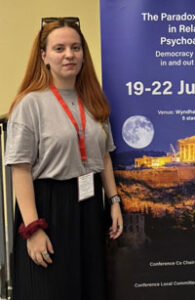
Katerina Kalantzopoulou, B.Sc.
Athens, Greece
Email Katerina Kalantzopoulou
Marianthi Michalakopoulou, M.Sc.
Athens, Greece
Email Marianthi Michalakopoulou
Carlos Rodríguez Sutil, Ph.D.
Madrid, Spain
Email Carlos Rodríguez Sutil
Noga Ariel-Galor, Ph.D.
Tel Aviv, Israel
Email Noga Ariel-Galor

Gila Ofer, Ph. D.
Tel Aviv, Israel
Email Gila Ofer

George Bermúdez, Ph.D., Psy.D.
Pasadena, California, USA
Email George Bermúdez
CONFERENCE CO-CHAIRS
It was a profound honor for us to organize the 21st Annual IARPP Conference, “The Paradox of Freedom in Relational Psychoanalysis: Democracy and Tyranny In and Out of Therapy,” held this June in Athens.
Hosting the conference in a city so intimately connected to the birth of democracy and civic dialogue gave the event an added historical and symbolic weight, deepening its meaning for us both personally and collectively as members of the Greek psychoanalytic community. This year’s conference unfolded amidst the backdrop of war and global upheaval, demanding from all of us a heightened capacity to hold and respond to shared anxieties and sorrows. One of the most difficult and yet deeply important undertakings was the integration of hybrid plenary and panel sessions, a structural decision made to ensure that our Israeli and Iranian colleagues, among others unable to travel, could still participate. Creating this virtual bridge was not only a logistical adaptation but also a profoundly ethical and relational act – a way of preserving connection in the face of rupture, displacement, and grief. Despite these challenges, we were deeply moved and inspired by the turnout: 472 participants from 26 countries came together – in person and online – to think, feel, and speak in dialogue. At a time when fragmentation and polarization often define the public sphere, we believe that gathering in embodied presence remains a vital affirmation of dialogue, encounter, and the generative potential of relational difference. The Athens conference became a space where this potential could be fully lived.
Among the many memorable features of the conference, the plenary sessions and innovative Large Group gatherings stood out as particularly meaningful. These collective spaces gave shape to the core tensions of the conference theme – freedom and tyranny, multiplicity and unicity – and brought participants into dynamic exchange across disciplines, languages, and geographies. The Large Group, in particular, was a bold and vulnerable experiment in democratic process: a space where conflict, silence, and resonance could be held without premature closure. We are grateful to the IARPP community for entering these spaces with such courage and openness.
Over the course of four days, we witnessed an extraordinary level of engagement – in panels and symposia, in informal conversations, and in moments of spontaneous exchange. The political and the clinical, the personal and the collective, were in constant interplay. We were especially moved by the strong presence of Greek clinicians, scholars, and candidates, many of whom were participating for the first time in an international conference of this scale. Their voices grounded the conference in a specific historical and cultural context, while also opening new avenues for dialogue and contribution on the global stage. We extend our deepest thanks to all who joined us – whether in Athens or online – and helped co-create a conference that became much more than an academic event. What unfolded was a thoughtful, passionate, and emotionally resonant gathering, one that, we hope, will remain with us all as a point of orientation in our clinical work, institutional lives, and shared commitments.
With warmth and appreciation,
Stavros, Alkinoi, and Fotini
IARPP Athens Conference Co-Chairs

Stavros Charalambides, CGP, M.Sc.
Athens, Greece
Email Stavros Charalambides
Alkinoi Lala, M.Sc.
Athens, Greece
Email Alkinoi Lala

Fotini Doumoura, M.Sc.
Athens, Greece
Email Fotini Doumoura