

Interview with Lauren Levine on her book, Risking Intimacy and Creative Transformation in Psychoanalysis
By Berta Loret de Mola (Mexico)
Dr. Lauren Levine is Co-Editor-in-Chief of Psychoanalytic Dialogues. Her book, Risking Intimacy and Creative Transformation in Psychoanalysis, was published in Routledge’s Relational Book Series, April 2023. As a psychoanalyst and writer, Lauren is interested in the stories we tell, individually and collectively, as well as what gets disavowed and dissociated by relational, intergenerational, and sociopolitical trauma. She’s concerned, too, with whose stories get centered and whose get erased, silenced, marginalized. This question of what gets left out of the narrative, and the potential for an intimate psychoanalytic process to help patients become the storyteller of their own lives, are at the heart of her book. Lauren teaches and presents nationally and internationally. She’s on the Faculty of NYU Postdoctoral Program and The Stephen Mitchell Relational Study Center.
Berta Loret de Mola, Ph.D. received her doctorate in Psychoanalytic Clinic from Centro ELEIA and her Master’s in Psychoanalytic Psychotherapy from the Asociación Psicoanalítica Mexicana. She is founder and coordinator of the Master’s in Psychoanalytic Psychotherapy at Universidad Marista de Mérida (Mexico) and a Board Member of IARPP. She is also editor and author of the book, La Pandemia en el Diván (The Pandemic on the Couch).
 Lauren Levine
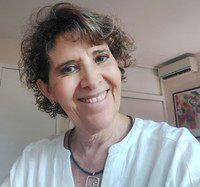 Berta Loret de Mola
: First of all, I would like to thank you for your time and willingness to participate in this interview. Your book is of incomparable clinical richness. It is, at the same time, engaging, moving, and profound. Throughout the book, you show the way in which you commit yourself with your patients, with your whole person. In an honest, courageous, and authentic way, you show how, within the analytic process, the patient’s history and your own become intertwined. You include your vulnerability and the reality of your experience with each patient, without concealing what is still within you.
Throughout the book, you address a wide range of themes. Motherhood, creativity, the expression of inner experience through dance, immigration, identity, vicarious suffering, the transgenerational transmission of trauma and race. It is almost as if you chose each of these themes in order to encompass a broad range of very contemporary issues.
Would you tell us a little bit about yourself and how you came to psychoanalysis and later to writing?
Lauren Levine: First of all, Berta, thank you so much for that beautiful introduction. That really means a lot to me. It feels like you’re asking such big, complicated questions about how I came to psychoanalysis and writing, and I think I could answer it in many different ways.
Well, I will say that I came to NYU Postdoctoral Program specifically to be in the heart of the relational world. I had been out of graduate school and in practice for twelve years before starting analytic training. My graduate school was quite ego-psychological, which for me, felt too constricting, prescriptive, and all-knowing, top down. I wanted to be able to use myself and my own affective experience, subjectivity and vulnerability to guide me in engaging deeply with my patients. So it wasn’t until the field was changing and relational psychoanalysis came into being that I felt the desire to immerse myself in analytic training. I deeply appreciated the ways in which relational psychoanalysis was expanding the field of inquiry to query issues of gender, race, class and culture and how our identities and experience inevitably got enacted in the clinical work. At the same time, in my own practice, I was aware of hitting walls in my work with patients and I wanted to go deeper, to understand the barriers that were getting in the way of accessing my own wounds and trauma, and how they intertwined with my patients’. And NYU Postdoc was where the foundational relational writers were teaching and writing.
I had done a lot of reading on my own, and discovered Stephen Mitchell, Tony Bass, Lew Aron, Adrienne Harris, Jody Davies and others. And it felt like this is where I wanted to be. When I started reading Stephen Mitchell, I felt like I was coming home – it resonated so much for me. And I knew that’s who I wanted to study with and learn from. I was so grateful to be supervised by Tony Bass, Jody Davies, Adrienne Harris and Philip Bromberg.
Berta Loret de Mola: And you had great and amazing supervisors.
Lauren Levine: And then Adrienne Harris became my writing mentor and I worked with her in a small writing group that we created, for 15 years. She read everything I ever wrote, including my book. I was also very sad that both Philip and Lew died before my book was published, because I feel so grateful to both of them as mentors.
Berta Loret de Mola: This is a wonderful introduction of your life, of your supervisors. And I think that they teach you how to be immersed with your patients. With each patient, you immerse yourself in a deeply emotional experience. You describe your dreams, which seems to represent and express some of the emotions that emerge within the analytic field. You expose your fragility and your humanity. We are not blank screens. We bring our whole selves into every encounter, and you show this with great clarity.
How do you think this process, so intense, profound, and deeply committed to each patient, affects relational analysts both positively and negatively? It’s not the same when the classical analyst is out of the scene.
Lauren Levine: We immerse ourselves with our whole person. I think it’s inevitable, and I think it makes me think about what Adrienne Harris wrote about our wounds, that they must serve as tools – they’re both our greatest liability and our most powerful resource. And I think, you know, in order for a deep psychoanalytic process to occur, we need to be open to being dysregulated and deeply affected by our patients. And inevitably, that’s going to lead to enactments and complexities that we need to be willing to address as openly as possible.
And I also think, building on Jessica [Benjamin]’s ideas, that when we get into enactments with our patients, it behooves us when we start to understand what’s going on, or at least that an enactment is going on, to work toward repair, to take the lead in opening ourselves up to looking at what’s going on between us and to owning our part in the enactment.
Berta Loret de Mola: I think that that pushes us to grow. It’s like being in a constant self-analysis. But what would be the negative part of this for the psychotherapist experience? I think we pay a price for this.
Lauren Levine: I do think that’s true. I think it can lead to a deep process. I also think analytic self-care, which is something that Adrienne Harris and Ken Corbett also wrote about, is not nearly well enough understood. I think it’s so crucial that we find ways of taking care of ourselves, through self-care and mutual care, as well as through supervision and study groups and exercise and yoga and how we schedule our days, finding ways to take care of ourselves, to be able to do the heavy lifting of the work that we do. For me, exercise – running and biking, yoga and Pilates – is deeply grounding and restorative, and a crucial aspect of self-care.
Berta Loret de Mola: I agree. Sometimes we charge ourselves with a lot of patients every day, because we say, well, one more; well, it’s not so much. And then we have a very, very busy schedule.
Lauren Levine: Exactly.
Berta Loret de Mola: It’s not good for our physical and mental health.
Lauren Levine: I think that also changes over time. I mean, for me, it’s one of the privileges that I so appreciate about being in private practice and being able to manage my own schedule. There were times in my life, like when my kids were young, and I wanted to take them to school, so I didn’t start till later. And then when they were in school, I changed my schedule accordingly.
In addition to private practice, I’m also co-editor in chief of Psychoanalytic Dialogues, which takes up a huge amount of time, and is also such a privilege. I absolutely love being the co-editor with Stephen Hartman, my close friend, but at the same time, it’s a lot of work and energy and time. And that also affects what I feel I’m able to do in terms of how many patients I see and how I structure my day and week. And I also care deeply about mentoring and supervising younger clinicians, and carving out time for my own writing, which feels deeply generative and important to me.

Berta Loret de Mola: Coming back to your book, there is a particularly moving chapter in which you speak about remaining waiting for Stefan, your patient, to return. That’s a very lovely chapter. Do you experience it as a hope, as an unconscious connection, or as a certainty that comes from something that is known but not yet sought?
Lauren Levine: I experience it as both a hope and a deep connection. In that chapter, I use Pina Bausch’s dance as a creative frame. In Bausch’s dance, there’s a deeply embodied connection between dancers and audience, that reminded me of the shared vulnerability and psychic collisions between analyst and patient. Something central to Bausch’s dance is the shock of trauma – its violence and haunting residue.
Stefan was a talented artist. When he first came to see me, he said he’d been in therapy twice before, but never with a woman. He told me that his first therapist was too harsh and the second one too soft. Then he said, “I think I’m like Goldilocks, looking for someone who’s just right.” And it felt like that held so much meaning, and represented so much of what I felt in the treatment with him, both his creativity and sense of humor, and also a way of engaging me that felt so powerful.
As I wrote in that chapter, there was also a warning in the impossibility of being just right and all of the complexities that would occur in the treatment. But I don’t think I perceived a crucial aspect of this communication from him. He’d already had two experiences in therapy that weren’t right, that didn’t help him in the ways he needed help. Could he trust me? Was I going to disappoint him as well?
He had a mother who was psychotic, who would fly into rages and was terrifying. And he both deeply longed for connection, to be recognized and understood, and he was also understandably terrified of intimacy and closeness. So we went through these ups and downs in the therapy, both when I was seeing him regularly and then he would disappear or cancel and I wouldn’t be able to reach him, or he wouldn’t reach out to me, and then he would show up again. And right now I have not seen him in a couple of years. I was just thinking about him recently and wondering how he was doing and whether I might hear from him.
He is someone who touched me deeply. I felt so engaged in the work and also challenged by it, because of his trauma history. It made it very difficult for him to stay connected and engaged in a consistent way.
Berta Loret de Mola: With patients with histories of early deprivation and abandonment and with relational trauma, like Stefan, a significant deficit in their early maternal childhood histories awakens in us the desire to become a better mother than they have. And as you said in your book we must relinquish that wish. How do we manage the tension between wanting to be the mother and leaving that place empty, but helping the patient? How do you regulate this tension between those poles?
Lauren Levine: It’s a wonderful question that obviously relates to both my work with Stefan and other patients, so much easier said than done, because I think the pull to be both a good enough mother, and the inevitability and importance of failing him was crucial to explore and live through. There was an erotic charge too. Sometimes I would be so much more in touch with a little boy in him who was so lonely and alone and yearning for that kind of maternal care. And other times, like in the example I gave about Goldilocks, there was a kind of playful seductiveness and an erotic engagement with him. And both dynamics felt challenging in different ways. It was an opportunity for us to really talk about that when he brought in some of his negative transference. The times that he didn’t want to come to sessions or the things that he didn’t share with me about how much he was drinking and smoking marijuana and how he felt my faith in him and positive feelings toward him that he didn’t want to lose. He didn’t want to open up the parts of himself that he felt so ashamed of. His courage to bring in his most shameful parts opened space that felt important and deeply meaningful.
Berta Loret de Mola: I think he recognized at one point that you were not his persecuted mother, but you were there to understand this, his drinking and smoking.
Lauren Levine: It’s true, but the intimacy was so hard to maintain. Even when he felt my positive regard, I think in some way that felt like too much to live up to and that he was worried about losing my –
Berta Loret de Mola: Your love.
Lauren Levine: Yes, there you go.
Berta Loret de Mola: Your admiration.
Lauren Levine: Exactly. He was also an artist, and I appreciated his work. And creativity was something we talked about a lot in the therapy.
Berta Loret de Mola: Going back to your book, could you tell us a little more about your writing process? I thought of it as a kind of self-supervision. I find it deeply inspiring to see how through writing you discover different layers of the experience both within yourself and within your patients. Writing is another layer of thinking.
Lauren Levine: I love writing, but it took me a while to get there, and of course it can be a struggle. Looking back, I felt enormously freed up by certain kinds of relational writing, freed from a more linear, prescriptive classical way of writing, beginning every paper with Freud. I felt liberated by the more personal, experiential, creative forms and content of relational writing, to bring in my own subjectivity, associations, dreams. It’s also important to me to write in a way that’s accessible, without excessive jargon, to invite people in, rather than gatekeeping, excluding and alienating. I also feel a desire to bring psychoanalysis outside our field, to share its richness and possibilities with the general public. That’s something Lew Aron cared deeply about and encouraged.
The first chapter of my book, which is so deeply personal about a transformative piece of work in my personal analysis around my relationship with my then young son, and the impact that it had on me and on my son and on our relationship, and then the resonance that that had in my work with a patient and her relationship with her son. That paper marinated in me for years; it actually took me seven years to write. It was my first analytic paper. I was in analytic training still. I worried so much about the privacy of my patient, myself, my son. I was working with Adrienne, and she said to me, just write. You can always delete things. Just sort of let the writing flow through you, because I’d get to a point in the writing and I’d think, oh, I don’t know if I can say this or write this. So I would just write, and keep on writing. And that actually helped me manage my critical internal voices, which I think is so important in the process of writing.
It’s something I talk a lot about in the second chapter about creativity and what opens up or closes access to our creative voice. Shame and critical negative voices really shut down access to our creative voice. But once I finished that first paper, I got excited about writing and more confident as a writer.
I tend to write in a very intuitive way that feels expansive and creative to me, like I tend to start with a question or an issue that comes from my work with a patient, a question that I’m wrestling with, or something that I’m trying to understand, or something that really strikes me. I keep reflecting and associating and see where it goes. In some way it parallels the nonlinearity of the analytic process.
After my first few papers, I began to write more about the relevance of psychoanalysis to art, politics and culture, and began to draw from literature, poetry, dance and film to explore clinical process. When I would get inspired by a poem or dance or a film, let’s say, like the film Room. I don’t know if you’ve ever seen that movie.
Berta Loret de Mola: Yes, I really liked it.
Lauren Levine: So devastating. But I also thought it was so powerful and also reflected aspects of the analytic process that I wanted to think more about and understand. When I write about clinical process, as you were saying, it becomes another layer of reflection, another layer of supervision, of thinking carefully about the work.
I’ve written a lot about my work with patients, and writing about patients is so complicated. There is so much disagreement in the field about writing about patients and how to do that in the most ethical way. Especially true now with patients having more and more access, and papers are published online. Years ago, it used to be that analysts assumed that patients would not read the work if it was in analytic journals or books. I strongly believe that when we’re writing, especially extended vignettes about patients, that the work belongs to both of us.
I feel strongly about asking patients permission to write about our work, and I also offer them an opportunity to read a draft to see if it resonates with them or if something doesn’t feel right to them. And then often the paper becomes kind of a transitional object in the treatment.
Berta Loret de Mola: Yes, sometimes the patient is very surprised to see the way you see him.
Lauren Levine: Yes, how they’re reflected through my eyes. I have found that it can become a profound piece of the work.
Berta Loret de Mola: I think that when we write, we use another part of the brain.
Once I had lost my voice. I told the patients I was seeing online that I would not talk, but if they want, I could write what I wanted to say. Some patients said, No, I don’t want my session. And some others said, Yes, we can see how it works. And with one particular patient, I had the most remarkable session that I have ever had. And when we finished, she said, you had never told me all these things that you thought.
Lauren Levine: That’s beautiful.
Berta Loret de Mola: Because I was writing. I think it’s something very different to think in writing, no?
Lauren Levine: I have a lot of associations, Berta. So one association is that years ago, when I was still in training, I saw an adolescent girl who had a terrible trauma history. She had been abused and she refused to talk at all. And we would sit there in the sessions and I would try occasionally to talk with her, to talk about what I was feeling, to try to encourage her to, you know, open up and talk with me. And it wasn’t going anywhere. And then I suggested that we turn our chairs so that we weren’t looking at each other. And that opened up a little more space, but still she wasn’t engaging much. And then I came up with the idea of writing to her. I wrote her a note. And I gave it to her. And she wrote back to me. And it became a powerful form of communication, tapping into a different register of relating, giving her more space to creatively engage with me. It reminds me so much of your story.
You know, there’s also something powerful about looking and being seen. Both how much we yearn for being seen in all our complexity and how challenging that can be when there’s been profound trauma and shame, finding different creative ways of making the space feel safe enough to be able to share one’s experience.
Berta Loret de Mola: Yes, that’s beautiful. Going back to your book, you speak about the importance of opening up a conversation about racial differences within the therapeutic process. I think this conversation could also be extended to differences in social class, which in countries such as Mexico are deeply intertwined with racial and cultural differences.
Lauren Levine: Yes.
Berta Loret de Mola: In Mexico, we have a lot of social difference. Suddenly, poor people come for help, people from small towns, and it’s very difficult to address the social differences. We don’t want them to feel hurt.
Lauren Levine: Well, I think it’s an interesting question about what feels so difficult about addressing social, cultural, racial, class differences. And I do think class differences can be just as difficult to talk about in treatment as racial differences and cultural differences. I also think white people generally, at least in the US, have a much more difficult time talking about race than people of color.
I think that’s true when the therapist is from a working class background as well, there’s often shame there. In my chapter where I write about my work as a white Jewish analyst with several patients of color, my experience has been sometimes people of color will raise issues of race directly, or about differences between us, and that it’s right out there from the beginning. But in my experience, often people of color don’t feel comfortable raising issues of race or racism directly with a white therapist unless the therapist makes it clear that they are up for those conversations. When someone isn’t speaking directly about issues of race, over time I can hear it alluded to, but not named per se in the material.
For example, I had a patient who’s African American, who was talking about her experience at work with a white boss, who was really not treating her well. She wasn’t specifically speaking about issues of racism, but I could hear it and feel it. Her rage and hurt. So I said her boss sounded racist, and then it opened up so much. I think there was something important about letting her know that I was comfortable talking about race, or if not always comfortable, then willing to step into the discomfort – to be challenged about my own biases and blind spots, and to listen, that gradually allowed her to feel safer with me. And that led to many conversations about how she’d been feeling in the treatment, what had or hadn’t been addressed or felt safe to talk about with me. And inevitably there are racial enactments that need to be talked about and struggled with and processed as openly and non-defensively as possible.
And so, what I write about in that chapter is that I think that it behooves those of us who are white or in privileged positions to raise issues of race or class carefully, sensitively, not necessarily right at the beginning of therapy. It takes both people a while to kind of settle in and develop trust and a therapeutic alliance. But I know of too many stories from Black colleagues of mine who were in analysis with white analysts, where they never talked about race, because it didn’t feel like it was something they felt like their analyst was comfortable talking about. I feel it’s very problematic not to find a way of talking about crucial issues of power and identity. I feel a responsibility to take the lead in raising issues of race, class, gender and intersectionality if the patient doesn’t on their own.
There are also complexities when you’re working with someone from a similar background – there’s a danger in taking too much for granted. I’ve had Jewish patients say to me, you understand, you know how it is, as if we agree on everything or have had totally similar backgrounds and experiences. Just because you’re from a similar background doesn’t mean there aren’t many differences. Marianne Goldberger writes about bright spots and blind spots.
It also makes me think about what has happened since COVID and working more on Zoom and how it allows us to see into our patients’ lives in different ways. The cat that walks across the keyboard, or we see their rooms and their lives, but also what they see of us, too. During the pandemic, I went to another state where one of my sons lives. That brought up a lot of feelings for some of my patients that I was able to afford to leave New York City, which was the epicenter of COVID. It was so terrible here. And some of my patients were frontline workers who didn’t have a choice about going in to work, and risked exposing their families to COVID. So that was a real privilege of mine.
Berta Loret de Mola: You talk about COVID in your last chapter. You said that when we come back to normal life, it would be a different world, a better world. Several years later now, how do you look back on the hope? What do you think remains of the awareness that emerged during the pandemic and what was lost along the way?
Lauren Levine: I think that was a quote by Arundhati Roy, a beautiful novelist and essayist. And it was really a challenge to us, a wake-up call for the importance of change, you know, not a kind of optimistic belief that things would change in such a positive way. And in fact, I’m living here in the United States with our fascist president, and things are terrible politically, for immigrants and people of color, for trans people, with attacks on civil rights and human rights. The horror in Gaza, and wars in Ukraine and Iran. And the climate catastrophe that’s getting worse every day.
I think so much is tenuous around the world, and it’s very scary. And I think it’s not clear whether and how we’re going to be able to recover from the harms that Trump has brought about.
One of the positive things that COVID brought us was that technology has provided us an opportunity to connect, like right now, we’re able to talk in a video from New York to Mexico. Are you in Mérida?
Berta Loret de Mola: Yes, yes.
Lauren Levine: I’ve been grateful to be able to teach and present internationally and have students and supervisees from around the world, and that’s an extraordinary opportunity to teach and learn and be connected across the miles. And I think we don’t yet know all that we lose, when we’re not in person and face to face with our patients, when we’re not in the room together.
I’m actually working on a new paper now on what it means to be human, and how technology cannot substitute for touching and being touched – metaphorically, experientially, psychically. The opportunities opened up through technology, but also, what gets lost when we’re not sitting in the room together and reading and feeling each other’s bodies. I feel so grateful to be able to see patients in person again, and to be able to work with people outside of New York.
Berta Loret de Mola: One thing very valued that COVID left us was much more consciousness about the importance of mental health. Everywhere.
Lauren Levine: Absolutely, that’s true and important. And I think that can also decrease the shame around seeking help, you know, that it’s normative and that we all need help and support.
Berta Loret de Mola: I would like to thank you once again for your time and your openness and for this stimulating conversation. I would also like to reiterate that reading your book was, as its title suggests, a transformative experience. It transformed my own understanding of writing. At the same time, it felt like reading literature and learning from you, not only as a psychoanalyst, but also as a person.
It is a book filled with freedom and intimacy. Thank you very much, Lauren.
Lauren Levine: Thank you so much, Berta. I feel like you’ve been enormously generous. I feel so moved by your comments and your questions. Muchas gracias.