

Irwin Z. Hoffman (1942–2026)
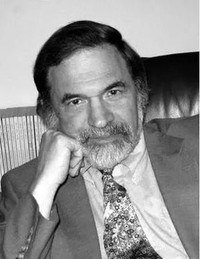 We are deeply saddened by the loss of Irwin Z. Hoffman, Ph.D., who died on April 5, 2026, and whose thinking transformed our understanding of relational psychoanalysis.
Irwin was a faculty member and supervising analyst at the Chicago Center for Psychoanalysis and the National Training Program for Contemporary Psychoanalysis, a Lecturer in Psychiatry at the University of Illinois College of Medicine, and an Adjunct Clinical Professor at the New York University Postdoctoral Program in Psychoanalysis and Psychotherapy. He served on the editorial boards of Psychoanalytic Dialogues and Contemporary Psychoanalysis and on the board of The International Journal of Psychoanalysis.
Irwin was a true trailblazer who introduced revolutionary ideas while engaging traditional psychoanalytic thought with unwavering intelligence and creativity. His courage in standing by his convictions, even in the face of professional adversity, reflected a deep integrity and commitment to truth. By questioning long-held orthodoxies, he opened a path for contemporary relational thinking. For those of us fortunate enough to have known him, these were not just professional virtues—they were the very essence of his being.
Throughout his career, Irwin authored a significant body of work developing his “dialectical-constructivist” view, most famously with Ritual and Spontaneity in the Psychoanalytic Process (1998). Building on these foundations in later essays, he focused on the responsibilities of patient and analyst as creative participants in analysis and moral agents in the world.
His ideas found expression in original concepts and memorable phrases. Many analysts are familiar with his phrase “throwing away the Book,” through which he emphasized the importance of authentic spontaneity in the analytic process. Less often recognized is how much he valued ritual, believing that without it, there was nothing meaningful from which to deviate. For Irwin, “dialectical constructivism” meant that polarities were never merely opposites, but mutually informing, each shaping the meaning of the other.
In his essay “Doublethinking Our Way to ‘Scientific’ Legitimacy: The Desiccation of Human Experience” (2009), Irwin extended this vision to the realm of research, arguing that the way psychoanalytic knowledge is validated cannot be separated from the ethical task of preserving the richness of individual human experience.
These scholarly achievements were matched by his profound influence on colleagues, students, and friends. For me, there was no one I would rather talk with about my clinical cases. It so happened that his 1983 paper, “The Patient as Interpreter of the Analyst’s Experience,” was the first relational paper I ever read, and by another stroke of luck, Irwin was also the first relational author I ever heard speak.
I did not actually meet Irwin until much later, after his return from a battle with cancer, which left him with two-thirds of one kidney, having already survived coronary bypass surgery, an experience he wrote about in “At Death’s Door: Therapists and Patients as Agents” (2000). Our paths crossed more directly at IARPP’s Annual Conference in Toronto in 2015, where Margaret Black suggested I invite him to give a webinar for the Candidates Committee, which I then co-chaired. He agreed, but this is when things became difficult, because Irwin did not readily welcome suggestions about how to do things! Encounters like this one deepened my appreciation for his steadfast integrity and his seriousness as a teacher and taught me not just about the responsibilities of leadership but also about having the courage to claim my own voice.
Unexpectedly, he took the time to read my published graduation paper without any prompting, and then insisted I continue writing, even though I had convinced myself it was the last psychoanalytic paper I would ever need to write. I had no idea then how immensely fortunate I was that Irwin would become my champion, guiding me while never sparing necessary criticism, or the degree to which this would forever change me. His devotion to candor helped me grow a thicker skin, gradually emboldening me to write and share my own work riffing on his ideas about ritual and spontaneity (“Spontaneity Within Ritual,” Contemporary Psychoanalysis, in press). Receiving his blessing on the way I spoke about his ideas was as meaningful as any professional recognition I have known.
Irwin grew up in Brooklyn, New York, and attended Columbia and Brandeis before earning his Ph.D. at the University of Chicago. There he wrote his dissertation on his work with parents of terminally ill children, an early expression of the existential concerns that continued to animate his writing. His interest in mortality remained central, in papers such as “The Dialectic of Meaning and Mortality in the Psychoanalytic Process” and “Death Anxiety and Adaptation to Reality in Psychoanalytic Theory.”
After graduating, he worked closely with his mentor Merton Gill, who dined at Irwin’s home every Monday evening for years. Together they co-authored a seminal volume, Analysis of Transference, Volume II: Studies of Nine Audio-Recorded Psychoanalytic Sessions (1982) and published papers on the patient’s experience of the analytic relationship.
Settling into Chicago, Irwin brought his lifelong devotion to sports, fostered in Brooklyn, to his adopted city, becoming a diehard Cubs fan because, like his beloved Dodgers, they belonged to the National League. Irwin was why I stayed up till all hours to witness the Cubs finally win the World Series after a 108-year drought. The day he attended the Cubs’ victory parade with millions of other fans was one of the happiest of his life. His love of sports did not end with baseball. He once told me his Chicago Bears Certificate of Appreciation, after more than forty years as a season ticket holder, was among his most prized possessions.
 Like so many others in our community whose thinking and lives were deeply touched by him, I will miss Irwin profoundly—not only as a mentor and colleague, but as a cherished friend. His absence will be keenly felt in our work, our discussions, and in the very evolution of relational psychoanalysis. The void he leaves is a testament to the depth of connection we shared with him.
Irwin is survived by his sons, Mark and Daniel, their wives, Erin and Katherine, and his adoring grandchildren, Sienna, Felix, and Keira. His wife Ann, with whom he shared fifty-five devoted years, passed away only two weeks after Irwin, a poignant reminder of the extraordinary bond and profound love that defined their life together.
Hilary Offman, MD
Toronto, Canada
Email Hilary Offman