

Colloquium Committee
The June 2026 IARPP Colloquium invited members from around the world into a rich international dialogue centered on Brent Willock’s (Canada) award-winning paper, “On Dreaming, Parasomnia, Dream Enactment, and Murder.” Over ten days, participants from across the IARPP community engaged with a work that bridges psychoanalysis, neuroscience, sleep medicine, trauma studies, and the justice system, demonstrating once again the vitality of relational thinking when it encounters questions that challenge our tendency to simplify complex social and individual phenomena.
Willock’s paper challenged readers to consider what happens when dreams are no longer confined to symbolic and representational experience. Somewhere in the transformation from latent dream thoughts to manifest dream content, affect may reach a point at which dreamwork fails in its symbolic function, emerging instead directly as bodily action. Willock’s exploration of parasomnia and violent dream enactment prompted participants to reconsider the relationships among unconscious fantasy, embodiment, agency, social responsibility, and dissociation. Rather than seeking definitive answers, the discussion embraced uncertainty, reflecting the relational commitment to thinking together at the boundaries of what can be known.
The colloquium was enriched by thoughtful opening reflections from an international panel representing diverse clinical and cultural perspectives. Panelists Ignacio Blasco (Spain), Keith Haartman (Canada), Elizabeth Hanscombe (Australia), Tee Landman (South Africa), Alessio Martella (Italy), Alejandra Plaza (Mexico), Adam Shechter (USA), Willow Pearson Trimbach (USA), and Zvi Steve Yadin (USA) explored the intersections of dreaming and enactment, the complexities of trauma and dissociated experience, and the implications of Willock’s comparative-integrative approach for relational psychoanalysis. Their contributions created multiple points of entry into the paper and set the stage for an exceptionally engaged conversation throughout the IARPP community. We would also like to extend our sincere appreciation to our distinguished panelists, as well as to active participants such as Matt Aibel (USA), Alexander Levchuk (Russia), and many others whose thoughtful contributions provided a solid foundation for an intense and thought-provoking ten-day colloquium.
As the dialogue unfolded, participants returned repeatedly to enduring relational questions. What becomes of psychic meaning when symbolization breaks down? How should analysts understand actions that appear to occur beyond conscious intention? Where do responsibility and agency reside when dreaming and waking consciousness become intertwined? Members drew upon their own clinical experience, theoretical commitments, and interdisciplinary knowledge, creating a conversation characterized by intellectual curiosity, creativity, and respect for differing perspectives.
One particularly meaningful aspect of this colloquium was the way it demonstrated relational psychoanalysis’ openness to dialogue beyond its traditional boundaries. Willock’s work invited sustained engagement with neuroscience, forensic psychology, and sleep research without sacrificing the complexity of psychoanalytic inquiry. Participants reflected on how these interdisciplinary conversations can deepen, rather than diminish, our appreciation of subjective experience and the relational clinical process.
The IARPP community is deeply grateful to Brent Willock for offering such a stimulating and generative paper, and for his generous and sustained engagement with participants throughout the discussion.
Once again, we would like to express our deepest gratitude to everyone who participated in or followed the colloquium with openness, creativity, and collegiality. The depth and generosity of the dialogue exemplified the spirit of the IARPP community and reaffirmed the value of creating spaces where difficult questions can be explored collaboratively across cultures, disciplines, and clinical traditions.
Laura Frigau-London (Italy/USA) & Temo Keshelashvili (Georgia/Canada)
IARPP Colloquium Committee Co-Chairs
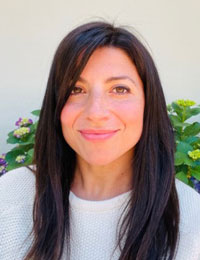
Laura Frigau-London, Psy.D., LMSW
Cagliari, Italy
Email Laura Frigau-London
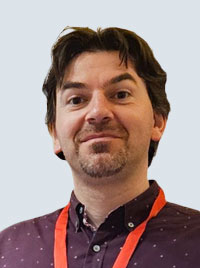
Temo Keshelashvili, M.Sc.
Tbilisi, The Republic of Georgia
Email Temo Keshelashvili